 Andrés Movilla
What the dryer takes
On the small print of owning clothes, and the things a machine takes without asking.
My clothes keep getting smaller. For a long time I didn’t notice, which is most of the problem, since it happens quietly enough that you end up blaming yourself or the fit or nothing in particular. Then a pair of pants came out of its first wash unusable, and that one I couldn’t explain away.
Once I’d seen it there, I started noticing it in other clothes. And with that comes the question you can’t un-ask: what am I doing wrong?
So I read about it. The clothes are cotton, cotton shrinks in a dryer, and the thing doing the shrinking is heat. That part is easy to find and everybody agrees on it. So I turned the heat down, and the clothes came out wet. I gave the cycle more time and they still came out wet. Kept reading, and the next answer was that my loads are too big.
The labels have an answer of their own, which is that none of this is what a dryer is for. Hang dry. Which is not feasible for me.
Somewhere in there I stopped improvising and settled on a protocol: four t-shirts to a load, delicate on both machines, which is what LG recommends for them. Small load, low heat, gentle tumble. If there’s a way to run a dryer that doesn’t cost you the clothes, it should look something like that.
Which leaves the question I actually care about. Not whether a dryer shrinks things, because it does, but whether I can dry a load in a machine and still have clothes I can wear afterwards. Either with no shrinkage at all, or with little enough of it that it doesn’t matter. Clothes are not cheap enough to be single use.
I have four t-shirts that have never been washed and two machines that have barely been used, so for once I can start from a known state instead of guessing at one.
Can four shirts go through a delicate wash and a delicate dry and come back the size they started?
That’s the ideal, and I don’t expect to get it. Zero shrinkage is the target to measure against, not the thing I need. What I need is the weaker version: does this protocol keep the loss small enough that the shirt is still a shirt I wear?
So the number matters more than the verdict. A shirt that loses a millimetre has technically shrunk and practically hasn’t. A shirt that loses three centimetres off the chest is a shirt I now own in a smaller size. Somewhere between the two is the point where a dryer stops being worth the convenience it buys, and I have no idea where that point sits until I measure something.
The baseline
You get one shot at this. Wash a shirt once and there is no way back to what it measured before.
Seven measurements each, taken flat, off a standard spec sheet.
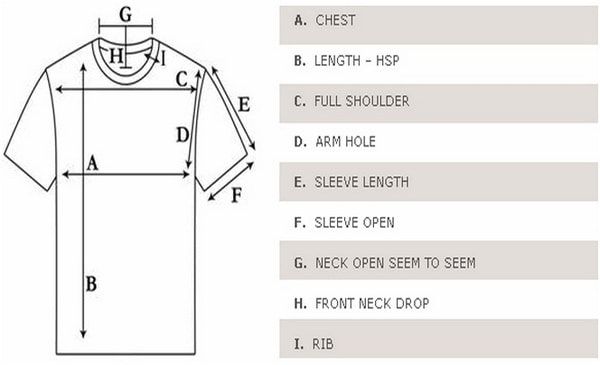
| Measurement (cm) | #1 “Mares” (L) | #2 “Desierto” (L) | #3 “Selva” (L) | #4 A. Calle (XL) |
|---|---|---|---|---|
| Chest | 54 | 54 | 54 | 62 |
| Length | 76 | 76 | 72.5 | 76 |
| Full shoulder | 50.5 | 47 | 46.5 | 46.5 |
| Arm hole | 28 | 27.5 | 26.5 | 24.5 |
| Sleeve length | 23 | 23 | 22 | 22 |
| Sleeve opening | 20 | 16.5 | 20 | 20 |
| Neck opening | 15.5 | 14.5 | 14 | 16 |
Centimetres, measured flat, pre-wash and pre-dryer. Shirts #1 to #3 are Apes, all labelled Large. Shirt #4 is Arturo Calle, labelled XL.
The wash
All four shirts are 100% cotton. None of them claims to be preshrunk or sanforized, and none gives a fabric weight.
- Washer: LG WM20VV26W, 20kg, front loading. Delicate preset.
- Dryer: LG DF20VV2W, 20kg, gas fired, moisture sensor. Delicate preset.
- All four shirts in one load.
What counts as too much
A tape measure on soft cotton is good to about a centimetre, and that is being generous, since a shirt laid flat can be smoothed a little wider or a little narrower depending on how much you fuss with it. So, four bands:
- Within 1cm. Noise. I can’t tell it apart from my own hands. Unchanged.
- 1 to 2cm. Real but marginal, around two percent. Invisible in wear, and the dryer stays.
- 2 to 3.5cm. Genuine shrinkage, four to six percent. Noticeable if you were watching for it. This is the band where the answer stops being obvious and turns into a judgement call.
- Past 3.5cm. The shirt is a different size now.
Chest and length decide it, because those are what determine whether a shirt still fits. A centimetre off a cuff is trivia. A centimetre off the chest is two centimetres of circumference.
What came back
The shirts came out damp, so they went back in for a second cycle. These are the numbers from in between.
| Measurement (cm) | #1 “Mares” (L) | #2 “Desierto” (L) | #3 “Selva” (L) | #4 A. Calle (XL) |
|---|---|---|---|---|
| Chest | 54 (0.0) | 52 (-2.0) | 51.5 (-2.5) | 57 (-5.0) |
| Length | 74 (-2.0) | 75 (-1.0) | 67 (-5.5) | 71 (-5.0) |
| Full shoulder | 48 (-2.5) | 46.5 (-0.5) | 44.5 (-2.0) | 44 (-2.5) |
| Arm hole | 24.5 (-3.5) | 24.5 (-3.0) | 23 (-3.5) | 24 (-0.5) |
| Sleeve length | 22 (-1.0) | 22.5 (-0.5) | 21.5 (-0.5) | 20.5 (-1.5) |
| Sleeve opening | 18 (-2.0) | 16 (-0.5) | 19 (-1.0) | 16.5 (-3.5) |
| Neck opening | 16 (+0.5) | 15.5 (+1.0) | 15.5 (+1.5) | 16 (0.0) |
Measured damp, after one wash and one incomplete dry cycle. In brackets, the change against that shirt’s own starting number. Red shrank, green grew, grey is inside the margin of error.
Sixteen of the twenty-eight measurements moved by more than a centimetre, and fifteen of those went down.
After the second cycle, dry
| Measurement (cm) | #1 “Mares” (L) | #2 “Desierto” (L) | #3 “Selva” (L) | #4 A. Calle (XL) |
|---|---|---|---|---|
| Chest | 53 (-1.0) | 51 (-3.0) | 51 (-3.0) | 57.5 (-4.5) |
| Length | 73.5 (-2.5) | 73.5 (-2.5) | 70 (-2.5) | 70 (-6.0) |
| Full shoulder | 46.5 (-4.0) | 44 (-3.0) | 47 (+0.5) | 43.5 (-3.0) |
| Arm hole | 24 (-4.0) | 24 (-3.5) | 23.5 (-3.0) | 22 (-2.5) |
| Sleeve length | 21 (-2.0) | 21.5 (-1.5) | 21 (-1.0) | 18.5 (-3.5) |
| Sleeve opening | 19 (-1.0) | 15 (-1.5) | 15.5 (-4.5) | 17.5 (-2.5) |
| Neck opening | 14.5 (-1.0) | 14 (-0.5) | 15.5 (+1.5) | 15.5 (-0.5) |
Measured dry, after two dry cycles. In brackets, total change against the shirt’s original measurement.
Every Apes shirt lost exactly 2.5cm of length. Not approximately. All three went through the same load and came out 2.5cm shorter, to the half centimetre, including the one that started 3.5cm shorter than the others. Three for three on the number that decides whether a t-shirt still covers you.
The Arturo Calle lost 6cm in the same load. So the 2.5cm is something about how Apes cut and finish their shirts, not something about cotton.
Selva read 67 long and 44.5 across the shoulders while wet, then 70 and 47 once dry. A shirt cannot gain three centimetres in a dryer, and wet fabric doesn’t explain it either, because the other three behaved. I mismeasured it. Which is the honest caveat for all of this: the error bars here are mine, not the machine’s.
One number per shirt
Rolling seven measurements into a single figure takes a choice, and the choice changes the answer, so here are both, on the dry numbers.
The flat average treats all seven equally, which is generous to the collar and the cuff and unfair to the chest. The body area is chest times length, the rectangle of fabric that actually has to fit around you, and it’s the one I’d believe.
| Shirt | Average of all 7 | Body area (chest x length) |
|---|---|---|
| #1 “Mares” (L) | -6.8% | -5.1% |
| #2 “Desierto” (L) | -6.7% | -8.7% |
| #3 “Selva” (L) | -5.1% | -8.8% |
| #4 A. Calle (XL) | -9.1% | -14.6% |
Percentage change against each shirt’s own starting measurements, measured dry.
Every shirt lost between a twentieth and a seventh of its torso. The three Apes shirts land in a band, roughly 5 to 9 percent, and the Arturo Calle is on its own at nearly 15, having lost 4.5cm across the chest and 6cm of length. That one is not the same size garment it was.
The verdict
No. Four shirts, the gentlest preset on both machines, four to a load, and every one of them came back smaller. The best case lost 5% of its torso and the worst lost almost 15%.
So the answer was never going to be a setting. I can’t hang them, and the protocol I’d settled on is already the careful version. What’s left is to buy bigger on purpose. Size up, and treat the first wash as part of the price.
The logic being that cotton shrinks to a point rather than forever. If a shirt gives up a little with each wash until it settles, then starting a size bigger means what’s left at the end is still something I can wear. This experiment doesn’t tell me where that point is, only that the first wash takes a good piece of it.
What I want is for the fabric to have been washed before I bought it. Preshrinking is not a mystery, it is a step somebody chose not to pay for. None of these four shirts claimed it.